
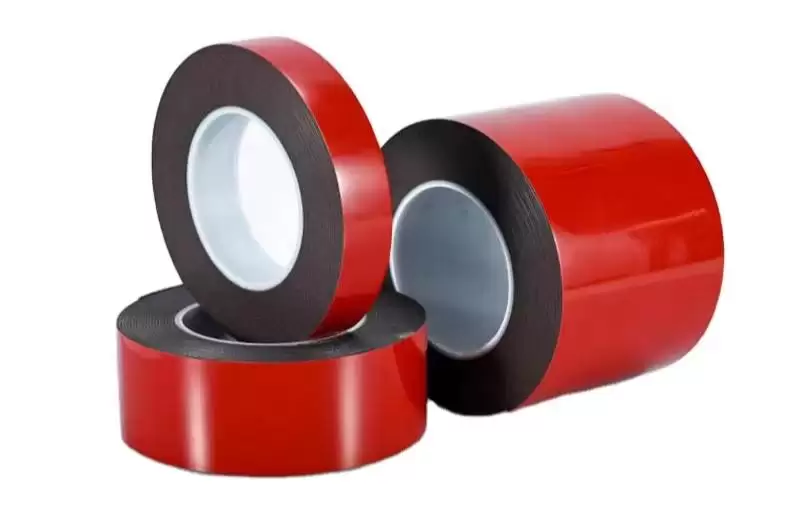
(And How to Avoid Them in Real Applications)
Foam tape looks simple, but many failures happen not because of the tape itself — but because of how it is used. From automotive sealing to industrial assembly, small installation mistakes can turn a reliable adhesive foam seal into a costly rework.
This article breaks down the most common foam tape installation errors, explains why they happen, and shows how to prevent them when using acrylic foam adhesive tape, adhesive rubber foam tape, adhesive foam strips, or an adhesive foam roll in real-world conditions.
Mistake 1: Treating Foam Tape as a Structural Fastener
One of the most common misunderstandings is assuming foam tape can replace mechanical fastening.
Foam tape is designed to:
• Seal gaps
• Absorb vibration
• Compensate for surface irregularities
It is not designed to carry heavy loads or resist strong shear forces on its own.
When adhesive foam strips are used as the only fixing method on doors, panels, or moving parts, gravity, vibration, and wind pressure will eventually cause movement or failure.
How to avoid it:
Use foam tape as a sealing or damping layer, and combine it with screws, clips, or brackets when structural strength is required.
Mistake 2: Poor Surface Preparation
Even the best acrylic foam adhesive tape will fail if the surface is not properly prepared.
Common issues include:
• Dust or sanding residue
• Oil, wax, or silicone release agents
• Moisture trapped on the surface
These contaminants block adhesive contact and reduce bond strength from the start.
How to avoid it:
Clean surfaces with isopropyl alcohol, ensure they are dry, and apply the tape within the recommended time window after cleaning.
Mistake 3: Installing in the Wrong Temperature or Humidity
Foam tape adhesives are pressure-sensitive and react strongly to temperature and moisture.
Problems occur when:
• Tape is applied in cold environments
• Installation happens on damp surfaces
• Condensation forms after installation
Low temperatures slow adhesive wet-out, while high humidity can weaken the bond before it fully sets.
How to avoid it:
Install adhesive foam seals in controlled conditions whenever possible. Most foam tapes perform best between 15°C and 30°C with low surface moisture.
Mistake 4: Choosing the Wrong Foam Density or Thickness
Not all foam tapes behave the same way. Using the wrong foam structure is a common cause of sealing failure.
Examples:
• Low-density foam collapses under pressure
• Foam that is too thin cannot fill gaps
• Over-compressed foam loses sealing recovery
This is especially common when using a generic adhesive foam roll without checking compression and recovery performance.
How to avoid it:
Measure the actual gap size and compression range before selecting foam thickness and density.
Mistake 5: Ignoring Environmental Exposure
Foam tape performance changes over time when exposed to harsh environments.
Long-term failure can result from:
• UV exposure causing foam aging
• Water ingress leading to adhesive breakdown
• Repeated vibration causing fatigue
Some adhesive rubber foam tape products absorb moisture if not designed for outdoor or automotive use.
How to avoid it:
Select foam tape rated for the real environment—waterproof, UV-resistant, and temperature-stable when needed.
Mistake 6: Uneven Pressure During Application
Foam tape requires uniform pressure to activate the adhesive.
Common application errors include:
• Pressing only the edges
• Stretching the tape during installation
• Leaving air pockets under the foam
This leads to weak bonding zones and early peeling.
How to avoid it:
Apply steady, even pressure along the full length of the tape. Do not stretch adhesive foam strips during placement.
Mistake 7: No Allowance for Thermal Expansion
Different materials expand and contract at different rates. Foam tape is often used to manage this—but only if installed correctly.
Problems occur when:
• Tape is over-compressed with no recovery space
• Rigid materials are bonded without stress relief
• Expansion gaps are ignored
This creates internal stress that slowly breaks the adhesive bond.
How to avoid it:
Choose foam tape with appropriate viscoelastic properties and allow controlled compression, especially in automotive and industrial assemblies.
Why Tape Quality Still Matters
Even perfect installation cannot compensate for poor material quality.
Low-grade foam tapes may suffer from:
• Uneven foam structure
• Fast adhesive aging
• Weak temperature resistance
At QKD, foam tape performance is controlled from raw material formulation to precision coating. With over 15 years of experience and a 15,000 m²manufacturing facility, QKD develops acrylic foam adhesive tape, adhesive foam seals, and custom foam solutions designed for real operating conditions.
All products are tested under ISO 9001 systems and meet UL, IEC, CE, and RoHS standards, supporting global OEM and ODM projects.
When to Consider Custom Foam Tape Solutions
Standard foam tape may not work when:
• Gaps vary across assemblies
• Materials have different expansion rates
• Noise, vibration, and sealing are all required
QKD supports customized foam tape designs—from foam structure and adhesive systems to thickness and roll format—helping customers avoid installation-related failures from the start.
Quick Installation Checklist
Before applying any foam tape, ask:
• Is this tape sealing or carrying load?
• Is the surface clean and dry?
• Is the temperature within range?
• Does the foam thickness match the gap?
• Is the tape rated for the environment?
If the answer to any is “no,” failure is likely.
Final Thought
Most foam tape failures are preventable. Understanding how acrylic foam adhesive tape, adhesive rubber foam tape, and adhesive foam rolls behave in real conditions helps you choose and install the right product—the first time.
If you need technical guidance or customized solutions, QKD works closely with customers from sample testing to mass production, ensuring performance matches application demands.
FAQ
Q1: Why does foam tape fail after installation?
Most failures come from poor surface preparation, wrong tape selection, or installing in unsuitable temperature and humidity.
Q2: Can foam tape replace screws or fasteners?
No. Foam tape is designed for sealing, vibration damping, and gap filling—not structural load bearing.
Q3: What is the best foam tape for automotive use?
Automotive applications usually require acrylic foam adhesive tape with strong temperature, vibration, and aging resistance.
Q4: How long does foam tape need to fully bond?
Initial adhesion forms quickly, but full bond strength typically develops within 24–72 hours, depending on conditions.
Related articles
How to Cut Double-Sided Foam Tape Cleanly | QKD Tape
The "Secret Weapon" of Automotive Bonding—Acrylic Foam Tape
How to Easily Remove Foam Tape from Your Car: A Practical Guide
How to Reduce Vehicle Noise and Vibration with Foam Tape | QKD Tape
